CES 2026: TOP CONSUMER TECH & MARKETING TRENDS

Overview
At CES 2026 (Jan. 6-9), it was business as usual with Artificial Intelligence (AI) driving many of the
exhibitor footprints and discussions, but with variations on implications to our collective
industries.
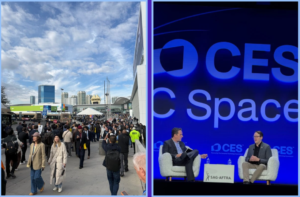
According to the Consumer Technology Association, CES featured “4100+ exhibitors and 148K+
attendees, including some 6900 media” representing a significant drop in exhibitors (~10%) but
showcasing strong growth in overall attendees (+5%) and media participation (+15%). The energy
at the convention center and the vast CES footprint was buzzing with strong (international)
participation as well.
From branded activations to parallel agency programming, the more transactional and revenue
focused elements have made their way into the fabric of the trade show. However, the focus
remains consumer technology and the Innovation Awards showcase the steady advances in the
space, blending tech, function and design.
CES 2026 highlights include:
-
Artificial Intelligence (e.g. Systems Integration)
-
Content (e.g. Media Networks and AI ethics)
-
Tech (e.g. Robotics and Entertainment)
-
Gaming (e.g. Hardware)
Key Takeaways
-
Overall industry familiarity with AI and its use cases have made discussions deeper
and nuanced whereas in the past it was about trying to understand the technology, the
thoughtful conversations focused around ethics, investment mix, as well as workforce
implications -
While 2025 focused on the feasibility and value of varied products and platforms that
tap into AI, this year the focus was on AI integration into systems and infrastructure
championed by NVIDIA as well as controversies including Elon Musk’s Grok and the
need to protect users -
Gaming was not a particular standout this year, with usual haptics and other
accessories for augmentation as focal points, however fan favorite Xreal continues to
impress in the space with its ROG Xreal R1 gaming glasses -
Adweek House hosted Pinterest, Marriott, United and more for discussions that
focused on how brands are becoming performance powerhouses with bespoke media
networks, for example that allows Pinterest, for example, with its CTV play via
tvScientific, to track performance from inspiration to checkout -
From a Tech standpoint, exoskeletons that assist with movement, robots that fold
laundry as well as chess master companions, it was clear that real world applications
of Robotics that are currently in the market were a standout at the show -
We also saw that some old ideas are new again from an Entertainment perspective,
LG’s OLED Evo W6’s is the resurrection of the company’s “Wallpaper TV,” but this
time it’s even thinner (about the depth of a pencil), and this return to hardware was a
departure from last year’s focus on IP (e.g. Barbie, etc) from brands including SONY
Artificial Intelligence
We can look at how AI showed up at CES through two spheres: (1) the private and (2) the public domains. In doing so we
look at applications for technology with AI embedded that is tangible, and powers our daily lives including play. We then
also see AI integration into systems and infrastructure, for example the indivisible but public applications that power cities.
Private Domain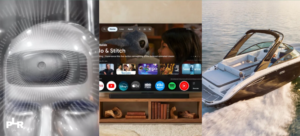
On the wellness front, myWaves and Restful showed what partnership can look when sound and lighting work together to
support sleep cycles, not just sell devices.
Lego didn’t just unveil a new “toy” brick, they introduced the SMART Brick, embedded with sensors, sound, motion, and
light. The signal? Play is no longer static. It’s responsive. Experiential. Alive.
Additionally, there was a lot of discussion around agentic AI or AI Agents. Google is at the helm of this genre of generative
AI, which is built to handle tasks independently, with no human supervision required, like ordering food delivery or running
code. Google also previewed how Gemini is making Google TV even more helpful, and bringing more ways to interact
with your TV across more brands and surfaces like projectors.
CES also leaned into culture and fun. Brian Tong and Justine Ezarik teamed up with chefs Marcel Vigneron and Bryan
Voltaggio for a Battle in the Booth at the Bosch Kitchen — showing off AI-powered cooking that actually feels helpful, not
controlling. Meanwhile, Brunswick showcased the Sea Ray SLX 360 Outboard, part of its largest-ever CES presence.
The focus wasn’t just on design or performance, but on how AI can simplify boating.

Public Domain
Siemens is partnering with NVIDIA to build an Industrial AI Operating System and launch the Digital Twin Composer.
This isn’t flashy consumer tech…it’s the invisible infrastructure that will power factories, cities, and supply chains. The kind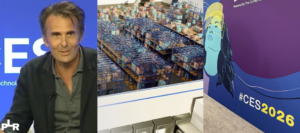
of innovation most people never see, but everyone feels. “By combining NVIDIA’s leadership in accelerated computing
and AI platforms with Siemens’ leading hardware, software, industrial AI and data, we’re empowering customers to
develop products faster with the most comprehensive digital twins, adapt production in real time and accelerate
technologies from chips to AI factories,” said Roland Busch, President and CEO of Siemens AG.
Havas became the latest agency to launch an AI platform designed to help teams move from brief to breakthrough faster
called AVA. That phrasing matters. The real opportunity with AI isn’t replacing creativity and it’s removing friction so ideas
can move. This is much more about the future of work at agencies and poses deeper questions for me like how future
marketers will be able to create and collaborate while understanding both the process and the richness of what has come
before so we do not have “generative” efforts but standalone work product.
Sustainability and AI continues to be lacking in conversation across CES with the emphasis on “innovation” and “fast to
market” which aligns with the speed with which the markets have moved despite tangible results outside of deep tech,
which now shows signs of weariness.

Content
Media and advertising agencies have long held court at CES, however with a footprint that extends far beyond the Aria,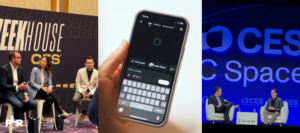
the hand and glove nature of consumer tech with marketing and sales is more present than ever. Outside of the business
imperatives, AI ethics was also part of many discussions.
On the travel and hospitality front, United Airlines’ Richard Nunn (CEO) and Marriott International’s Peggy Roe (EVP &
CCO) attended ADWEEK House to speak with Will Lee about what’s on the horizon for each. They personalized their
fireside chat talking about their own trips and experiences to couch how the “seat back” has become addressable and
can drive the (consumer touchpoint) “experience”. As consumers spend 3+ hours in flight, “dwell time” is an opportunity
to sell more and/or tap into consumers in a “captive” environment. Additionally, each now with their own media
networks, Kinective & Riott respectively, position themselves apart from Retail Media Networks because unlike retail,
“we can play brand game with luxury etc. because most money in retail, it’s CPG funds focused.”
At the C-Space, Duncan Crabtree-Ireland (SAG-AFTRA) joined Matthew Belloni (PUCK) to talk openly about AI, labor,
and responsibility and artfully made the case for caution.
A few points that landed hard:
-
AI is being driven by BIG TECH but where are workers, artists, and creators in the process?
-
Just because something can be done doesn’t mean it should be done
-
Directors want to work with actors, not algorithms
-
Tools like Grok enabling non-consensual image manipulation send the wrong signal and normalize behavior that
shouldn’t be acceptable -
The near-term value of AI is efficiency, not fully AI-made productions
“On Wednesday, (January 7th) Grok produced 7,751 sexualized images in one hour — up 16.4% from 6,659 images per
hour Monday, according to an analysis of the bot’s output.”
The discussion around Grok was then punctuated when, “the Grok AI image generation feature … (was) made for paying
customers only and has been seemingly restricted from making sexualized deepfakes after a wave of blowback from
users and regulators.”
Pinterest’s Chief Content Officer, Malik Ducard spoke at ADWEEK House and discussed how 96% of queries are unbranded on the platform, and that’s because users want to be inspired. As a result Pinterest sees the business opportunity to move into the CTV space in order to drive performance media and better compete in the marketplace.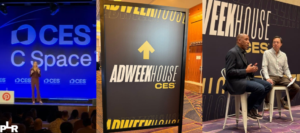
Over 50% of the platform is currently Genz, which has reignited its relevance. The growth has been dynamic for the company with ~70% of its revenue now coming from the bottom of the funnel in 2025 Q3 vs even distribution across its funnel in Q3 2022, which is a huge shift.
The importance of creators was on full display, as they shared that they will debut a new program called “Bring my Pinterest Board to Life” in March on the Roku streaming platform, produced by B17 Entertainment and featuring creators Drew Michael Scott (@lonefoxhome), Caroline Vazzana (@cvazzana), and Tay BeepBoop Nakamoto (@taybeepboop). Despite strong Pinterest presence at CES this year, the announcement that its CMO is stepping down did not go unnoticed.
Throughout the trade show, activations from media brands and agencies including Viant, Deloitte, The Weather Channel, Chase Media Solutions and more sought to connect with marketers at the event.

Tech
Much of the glitter from CES came through the technology itself, including robotics that were on display versus
TV’s and other traditional hardware from SONY and others. Specifically, there was a clear line between how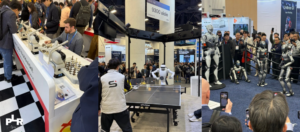
robots can power human interaction beyond Amazon warehouses so they can “work” (e.g. exoskeletons that
help people life boxes) and instead help deliver on quality of life promises including physical and mental activities
that can benefit people in their daily lives.
North, an autonomous humanoid robot was unveiled by Singaporean AI company Sharpa and held court during
a ping pong game while Sense Robot demonstrated its chess prowess. Both pointed toward use cases that
enable humans to interact with robots effectively during leisure time to exercise both mind and body.
There were also a myriad of examples of pet simulators, including Vbot, that act as companions to humans, with
their ability to do tricks and entertain.
For those wishing to have more help at home, LG’s CLOiD (slowly) folded and sorted laundry, fetched drinks
from the fridge, placed food in the oven and retrieved a set of lost keys. However it’s a long way for being ready
for prime time.
Our resident artist and futurist will.i.am’s is even in on the game, with MÖFO (yes, MOFO). It’s agentic AI
hardware, kind of like a Rabbit R1 or AI Pin but in the form of a teddy bear.

Game
Despite what you’ve been told the Metaverse has seen better days, and there’s no greater sign than the recent
Meta layoffs, however Gaming as an industry has never been stronger and what CES showcases is just how
special the arena is. In the “Gaming/XR” area, XREAL and Insta 360 commanded attention and the stage,
showcasing AR/VR/XR hardware to packed footprints.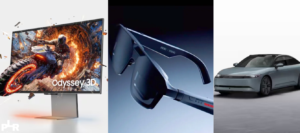
One standout: “Project Aura is the first optical see-through XR headset made by XREAL for Android XR.
Lightweight and tethered, cinematic, and Gemini AI-powered, Project Aura delivers large 70-degree field-of-view
multimodal experiences. Project Aura is the result of a strategic partnership with Google and XREAL to expand the
ecosystem of spatial computing devices built on Android XR. This collaboration also includes Qualcomm
Technologies, Inc., bringing together leading innovation across hardware, silicon, and software to build the next
wave of XR experiences.”
Additional notable gaming tech:
-
XREAL x ASUS ROG “R1”, gaming-focused smart glasses with the “world’s first 240Hz spatial display” that
immerses gamers in a 171-inch experience with lightning fast, ultra-smooth frame rates -
Samsung “Odyssey 3D” Monitor, “the world’s first 6K glasses-free 3D gaming monitor,” it uses real-time eye
tracking to provide the user with a “3D” view of whatever’s on their screen -
Sony Honda Mobility’s AFEELA 1, the car integrates PS Remote Play and a high-fidelity “Immersive Audio”
system, turning the cabin into a gaming sanctuary.

THANK YOU
Hope you enjoyed these insights.
If you would like to explore more from CES and the world of marketing,
you can follow #PLRInsights on social media and
visit our blog for the latest news:
https://www.plrgroupinc.com/blog
Sign up for our monthly newsletter to stay ahead of emerging trends and ideas!
Please reach out if you have any questions or if you would like to explore how to
activate and incorporate these insights into your business or marketing strategy.
We look forward to connecting with you and hopefully seeing you at CES 2027.
Author
By Pedro L. Rodriguez,
Founder and Principal,
PLR Group Inc.